Yes, local SEO is still worth it in 2026 when customers search for services you actually provide in places you serve, and those searches produce qualified inquiries or sales. Its value depends on the business it brings—not rankings alone—and it requires ongoing work on your business information, website, content, and measurement.
- Is local SEO still worth it in 2026? Yes, when qualified local leads justify the work.
- Google local rankings depend on relevance, distance, and prominence; website content cannot control all three.
- Improveseoplugin suits WordPress owners who need local keyword research and scheduled content publishing.
- Measure qualified calls, inquiries, and sales alongside search visibility before expanding your local SEO work.
Why this matters
You do not need more visitors from places you cannot serve. You need people who want the right service, can become customers, and can find a clear next step on your website.
Improveseoplugin supports the content side of that work through local keyword research, branded content generation, and publishing from WordPress. Those functions address content production; judging the investment still requires tracking what happens after someone finds your business.
The decision is not whether local SEO works in the abstract. It is whether your local search activity produces business you want. Separate visibility from commercial results before you commit more time to either content or optimization.
Is local SEO still worth it in 2026?
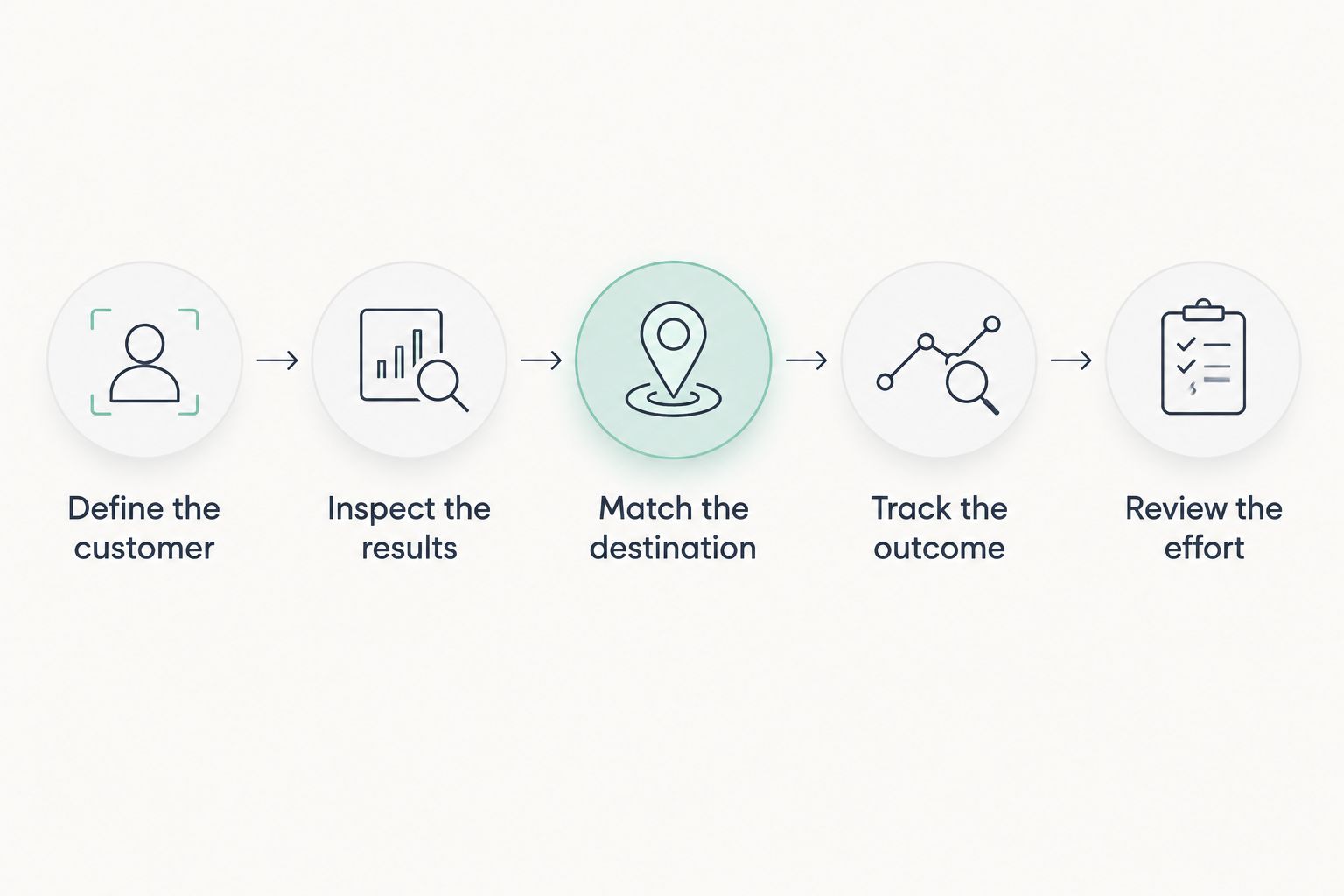
Yes, provided your offer matches local search demand and your website turns relevant visits into measurable actions. Use this sequence to decide where local SEO belongs in your marketing plan:
- Define the customer. Specify the services you want to sell and the locations you genuinely serve. Exclude work you do not want, even when related searches attract attention.
- Inspect the results. Search representative service-and-location phrases. Note whether the results show maps, service pages, directories, or informational articles; each points to a different content need.
- Match the destination. Send service searches to useful service pages, not an unrelated article or a homepage that leaves visitors guessing.
- Track the outcome. Record inquiries, distinguish qualified leads from irrelevant contacts, and connect completed jobs or sales to their source where possible.
- Review the effort. Compare the work required with the commercial outcomes. Keep improving pages that support relevant demand; revise pages that attract the wrong audience.
The strongest evidence is a traceable path from a relevant search to a qualified inquiry and a completed sale. A higher position helps explain visibility, but it does not establish profitability.
Business Profile or website content: which deserves attention?
Google Business Profile and your website serve related but different purposes. Google's Business Profile Help guidance identifies relevance, distance, and prominence as the main factors in local results; publishing articles does not remove those constraints.
For your 2026 plan, choose the work that fixes the clearest gap rather than treating every local SEO task as equally urgent.
| Area | Best for | Advantage | Limitation |
|---|---|---|---|
| Google Business Profile | Eligible businesses seeking visibility in Maps and local results | Presents business details where people search locally | Distance remains outside your control; eligibility rules apply |
| Website service pages | Visitors deciding whether your service fits their needs | Gives you room to explain scope, service area, and the next step | Requires accurate details and a usable inquiry process |
| Supporting articles | Searchers researching a problem before choosing a provider | Answers questions that a service page cannot fully cover | Informational visits do not necessarily become inquiries |
Fix an unclear service page before building a large article library. A useful article can introduce your business, but visitors still need a destination that explains what you do and how to proceed.
Do not assume every business qualifies for a Business Profile. Check Google's eligibility guidance before making profile creation the foundation of your plan, especially if your business operates entirely online.
What makes local SEO worth the effort?
Local SEO earns its place when it connects a service you can deliver with a customer you can serve. The following factors explain why the same publishing routine produces different business outcomes:
- Service relevance: A page must answer the service need behind the search. A city name alone does not establish that match.
- Geographic fit: Interest outside your service area does not have the same value as an inquiry from a customer you can accept.
- Search intent: Someone comparing repair options needs different information from someone ready to book a repair.
- Page usefulness: Clear scope, practical answers, and an obvious contact route help visitors decide what to do next.
- Lead quality: An inquiry matters commercially only when the requested work, location, and customer needs fit your business.
- Production effort: Research, drafting, checking, and updating content all require attention. Include that work when evaluating results.
These are planning criteria, not a promise of rankings. Use them to identify the weak point in your own path from search to sale instead of copying another business's publishing schedule.
How should you measure local SEO in 2026?
Start with a written definition of a qualified lead. For example, require the inquiry to concern a service you provide, fall within your service area, and include enough information for a meaningful response.
Then separate the measurements that explain discovery from those that establish business value:
- Search visibility: Use Search Console impressions and clicks to understand how people find your website in Google Search.
- Website actions: Track completed inquiry forms and relevant contact actions. Test tracking after website changes.
- Lead quality: Label inquiries by service, location, and suitability rather than counting every submission equally.
- Commercial outcomes: Record which qualified leads become booked work or sales. Keep the original source when you can establish it.
As a practical reporting routine, compare 28-day periods and conduct a 90-day review of the pages you changed. These are review intervals, not ranking deadlines; account for seasonal demand and the amount of usable evidence before drawing conclusions.
Avoid double-counting a person who calls after submitting a form. A clean lead record is more useful than an inflated conversion total, especially when a small business makes decisions from a limited number of inquiries.
What should you do first with limited time?
Choose one service you want to grow and one real service area. Read the relevant page as a prospective customer: can you tell what is included, where the service is available, and how to ask for help?
A 30-day starting plan gives you a defined scope without pretending that search performance follows a fixed timetable:
- Days 1–7: Check business details, review your main service page, and confirm that inquiry tracking works.
- Days 8–14: Improve the page's service explanation, geographic accuracy, and next step. Remove unsupported promises.
- Days 15–21: Publish a supporting answer to a genuine customer question that the service page does not resolve.
- Days 22–30: Check that the pages are accessible, inspect available search data, and review incoming inquiries for relevance.
Do not turn this schedule into a daily publishing requirement. Its purpose is to finish a connected set of useful tasks, not to fill a calendar.
Improveseoplugin is best for WordPress business owners who need local keyword research and scheduled content publishing. It helps with finding low-competition local keywords, generating branded content, and publishing from the dashboard; you still need to check service details, geographic claims, and whether inquiries become customers.
When should you change your local SEO approach?
Change the approach when the evidence identifies a mismatch. More content is not the automatic answer to weak results, and abandoning local search is not the automatic answer to a quiet reporting period.
Use the symptom to choose the next action:
| What you observe | What to investigate | Next action |
|---|---|---|
| Relevant impressions but few clicks | Whether the page and search appearance match the query | Clarify the page's purpose and search-facing wording |
| Visits but few inquiries | Whether visitors understand the offer and can contact you | Review the service explanation and inquiry process |
| Inquiries from unsuitable locations | Whether geographic language matches your actual coverage | Correct service-area wording and page targeting |
| Qualified inquiries but few sales | Whether the issue occurs after the initial contact | Review response handling and sales outcomes separately |
These observations direct an investigation; they do not prove a cause. Inspect the actual queries, pages, and inquiries before changing the whole strategy.
For your 2026 review, keep a record of what changed and when. Otherwise, a redesign, altered service offer, or broken form can be mistaken for an SEO problem.
Is local SEO worth it if you already get referrals?
Yes, local SEO can complement referrals by helping referred customers find and assess your business. A recommendation does not replace the need for accurate business details and a useful service page.
Keep the distinction clear when reviewing results. Someone who searches your business name after a referral should not automatically be treated as a customer acquired entirely through non-branded search.
Is local SEO worth it without a storefront?
Yes, local SEO can be relevant when you travel to customers or serve a defined area without receiving customers at your address. Your website should explain that service model accurately.
Business Profile eligibility is a separate question. Follow Google's rules for your business type, and do not create location claims merely to target additional cities.
Can you do local SEO yourself?
Yes, you can handle local SEO yourself when you can maintain accurate information, publish useful pages, and review business outcomes consistently. Start with a narrow scope you can finish and maintain.
Get specialist help when technical problems, measurement gaps, or competing priorities prevent that work. Hiring help does not remove the need to explain which services and locations matter to your business.
FAQ
Is local SEO still worth it for a small business in 2026?
Yes, local SEO is worth it when it produces qualified inquiries or sales from customers your small business can serve. Judge the work by business outcomes alongside search visibility, not rankings alone.
How long should I wait before reviewing local SEO results?
Use a 90-day review as a planning checkpoint, not a promised ranking deadline. Compare 28-day periods, check what changed, and account for seasonal demand before deciding whether to expand the work.
Do I need a separate page for every city I serve?
No, serving a city does not automatically justify a separate page. Create a location page when you can provide genuinely useful, accurate information for that location rather than repeating the same text with a different city name.
Are blog posts enough to improve local SEO?
No, blog posts alone do not cover business information, service-page clarity, inquiry tracking, or Google's local ranking factors. Use supporting articles to answer relevant questions while keeping the main service pages useful.
What is Improveseoplugin best for?
Improveseoplugin is best for WordPress business owners who need local keyword research, branded content generation, and direct publishing or scheduling. Those capabilities support content production; they do not replace checking business facts or measuring qualified leads.
What should I track besides keyword rankings?
Track qualified inquiries and completed sales alongside search impressions, clicks, and website actions. Distinguish unsuitable contacts from potential customers and avoid counting the same person repeatedly.
Does a higher Google position guarantee more customers?
No, a higher position does not guarantee more customers. The search must match your service and location, and the visitor must be able to understand your offer and take the next step.
One last thing
Your most useful local SEO improvement can be a clearer sentence, not another page. Open the service page you most want customers to find and check whether it states what you do, where you do it, and how to request help.
If any answer is missing, fix that before expanding your 2026 content plan. Discovery matters, but a visitor who cannot determine whether you serve them has not reached a useful destination.