
There is no fixed deadline for ranking for local keywords in 2026: the timeline depends on whether Google can index your page, how well it answers the search, and the competition for that result. Appearing somewhere in search is not the same as reaching a useful position or generating an inquiry, and ranking in Google Maps is a separate outcome from ranking a website page.
- How long does it take to rank for local keywords? No universal deadline applies to local SEO.
- Separate website rankings from Google Maps visibility before measuring progress.
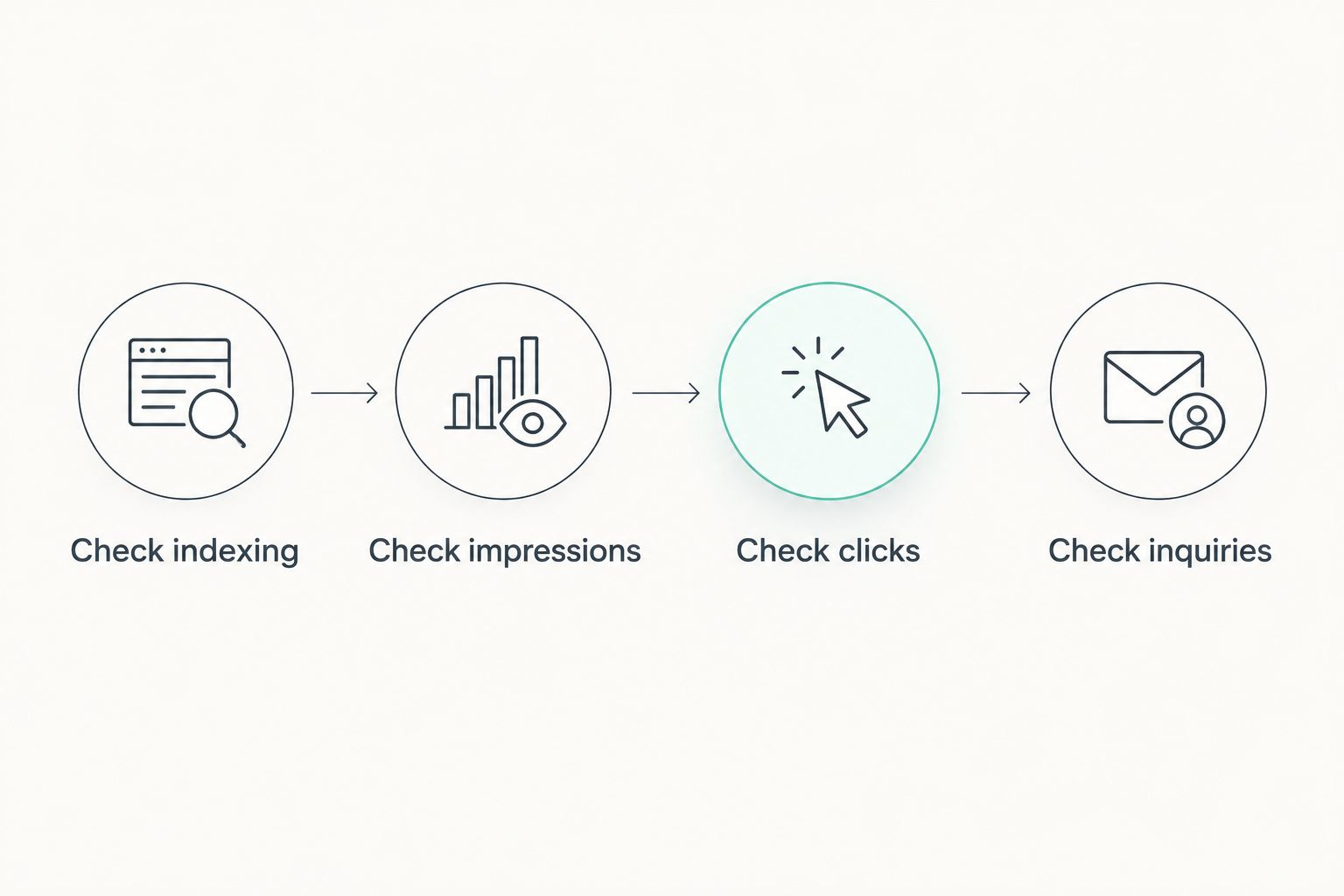
- Check indexing first, then impressions, positions, clicks, and qualified inquiries.
- Improveseoplugin suits local WordPress owners who want keyword research and content publishing in their dashboard.
How long does it take to rank for local keywords?
A useful ranking timeline starts with a defined result, not a promised delivery date. Decide whether you mean getting a page indexed, appearing for a service-and-location query, reaching a prominent organic position, or appearing in Google Maps.
Those outcomes require different checks. A page can appear for a narrow query without attracting meaningful clicks, while a business can receive Maps visibility without its website ranking prominently for the same phrase.
| Outcome | What it establishes | What it does not establish |
|---|---|---|
| Page indexed | Google has included the URL in its index | A prominent position for your target keyword |
| Search impressions | Your page appeared in search results | Visits or qualified leads |
| Organic clicks | Searchers selected your website result | That those visitors became customers |
| Google Maps visibility | Your business appeared in local results | The same position for every searcher |
| Qualified inquiries | Search produced relevant customer interest | That every target keyword ranks well |
For a local business reviewing SEO in 2026, this distinction prevents a common reporting mistake: treating an early appearance as a finished result. Set the target before you judge the pace.
Why this matters
If you run a local business, you need to know what to fix next—not accept an unexplained instruction to wait. An indexing problem needs a technical correction; an irrelevant page needs better targeting; a visible page with few clicks needs a closer look at the search result and query.
Improveseoplugin is best for small local business owners who want keyword research and content publishing inside WordPress. The Improveseoplugin WordPress plugin helps you find low-competition local keywords, create branded content, and publish or schedule it from your dashboard. That workflow addresses content production, not a guaranteed ranking date.
Keep the distinction clear when choosing software or outside help. Easier publishing removes a task from your workload; it does not remove Google's evaluation of the page or your business's competition.
Website rankings: measure the page and its search intent
For website rankings, start with a page that matches the job the searcher wants done. Someone searching for a service in a city needs to understand whether you provide that service there and how to take the next step.
A general homepage does not automatically answer every service-specific question. Equally, a separate page is not justified merely because you can replace one city name with another.
Best for: service-and-location searches where your website can give a useful, specific answer.
- Advantage: You control the page's explanation, service details, internal links, and next action.
- Limitation: Publishing a relevant page does not guarantee that Google will index it or rank it prominently.
- Next move: Check that the intended page is accessible, indexable, accurate, and clearly aligned with the query.
Before expanding your content, identify which existing page should answer each important search. Multiple pages with the same purpose can make your own measurement harder: you need to know which URL you are trying to improve.
Google Maps rankings: measure the business and the location
Google describes local results in terms of relevance, distance, and prominence. That means Maps visibility is not simply a reward for publishing more website articles.
Your business information needs to describe the real business accurately. The searcher's location also matters, so a ranking observed from your office is not a universal ranking across your entire service area.
Best for: customers looking for a nearby business or a service available in their area.
- Advantage: Local results can connect customers with relevant nearby businesses.
- Limitation: You cannot control where someone searches, and visibility differs by location.
- Next move: Review your Google Business Profile for accuracy and evaluate visibility in the locations you actually serve.
Track Maps and website performance separately. If one improves while the other stays flat, investigate that specific channel rather than declaring the whole local SEO effort successful or unsuccessful.
Why local keyword ranking timelines vary
There is no single waiting period that accounts for every website, query, and location. These factors explain why the same publishing schedule does not produce the same ranking outcome for every business.
- Indexing access. A page blocked from indexing cannot earn an indexed organic result. Check access before rewriting otherwise useful content.
- Search intent. Your page needs to answer the actual query. A broad educational article and a local service page serve different purposes.
- Competing results. Evaluate the pages already appearing for your target search. Difficulty is specific to that result, not just the popularity of the keyword.
- Business relevance. For local results, your business information needs to match what the customer is seeking. A misleading category is not a shortcut.
- Searcher distance. Maps results depend partly on proximity. Website edits do not change the distance between your business and the searcher.
- Prominence and useful evidence. Google's local guidance includes prominence, with signals such as links and reviews. Publishing more pages is not a substitute for establishing a real, credible business presence.
Fix the limiting factor instead of increasing output by default. If Google cannot index the intended page, another batch of articles does not resolve that page's access problem.
How to track progress without guessing a deadline
Use a sequence that separates technical eligibility from search performance. This gives you a practical decision process even when rankings have not reached your target.
1. Check indexing
Use Google Search Console's URL Inspection to review the intended page. Look for indexing restrictions, an unexpected canonical selection, or another issue that explains why the URL is not appearing as intended.
A request for indexing is not a ranking guarantee. Resolve the underlying issue rather than repeatedly submitting the same unchanged page.
2. Check impressions
Review whether the page receives impressions for relevant searches. Read the actual query wording: impressions for unrelated searches do not establish progress toward your intended local customers.
Also check which page appears. If Google shows a different URL, compare its purpose with the page you intended to rank before creating more content.
3. Check clicks
When relevant impressions appear, examine clicks alongside position and the search result's wording. A title should accurately describe the service and location rather than promise something the page does not provide.
Do not diagnose a click problem from an isolated impression. Compare meaningful reporting periods and keep the query context attached to the numbers.
4. Check inquiries
Connect search visibility to the action your business needs, such as a relevant call or submitted inquiry. Keep qualified inquiries separate from spam, wrong-area requests, and searches for services you do not offer.
Better rankings are useful only when they support a business objective. A narrower query that brings appropriate customers deserves attention even if a broader phrase attracts more impressions.
Keep a brief change log alongside these checks. Record what you changed and when, so you can distinguish a page update from a reporting fluctuation without relying on memory.
Set review dates, not ranking promises
For your 2026 plan, use the following as an editorial review schedule, not an expected time to rank. These intervals organize your work; they are not performance benchmarks.
| Review checkpoint | What to review | What not to conclude |
|---|---|---|
| After 7 days | Page access, indexing status, and obvious publishing errors | That a low position proves the content has failed |
| Every 28 days | Relevant queries, page impressions, clicks, and inquiries | That every change came from your latest edit |
| After 90 days | The accumulated record of visibility, changes, and business outcomes | That every local keyword should now rank |
If a page remains unindexed, keep investigating indexing rather than waiting for the next review date. If it receives relevant impressions but no useful visits, examine intent, position, and result wording.
Avoid rewriting the entire page after every position change. Make a change for a specific reason, record it, and assess the relevant evidence at the next review.
Should you target low-competition local keywords first?
Prioritize a relevant, specific local query over a broad phrase that does not match your services. Lower competition is useful only when the search represents a customer you can actually serve.
Start with the language customers use to describe the service, problem, and location. Then inspect the current results to understand what kind of answer Google is showing.
A service page fits a customer seeking a provider. An explanatory article fits a customer trying to understand a problem or decision. Match the format to the search rather than forcing every keyword into a blog post.
Do not treat a keyword difficulty label as a delivery estimate. It does not tell you the date your particular page will rank, and it cannot replace checking the result itself.
Does publishing more often make local keywords rank faster?
Publishing frequency is not a ranking deadline. More pages give you more material to maintain, so each page needs a distinct purpose and accurate information.
A schedule helps you complete useful work consistently. It does not turn thin location variations into useful local pages or repair an existing page's indexing restriction.
Before adding another article in 2026, ask whether the next task should instead be improving a service explanation, correcting business information, or checking why a relevant page is not appearing. Choose the task that addresses the actual obstacle.
FAQ
Can my local business rank immediately after publishing a page?
Publishing does not guarantee immediate ranking. Google must be able to discover and index the page, and a prominent position depends on more than publication alone.
How long should I wait before checking local SEO results?
Check technical access as soon as the page is published, then use a consistent review schedule. A 28-day reporting review is a planning choice, not a promise that rankings will improve within that period.
Does a new website have a fixed waiting period before it can rank?
There is no universal waiting period that guarantees a new website will rank. Check indexing, query relevance, and the competing results instead of relying on the site's age alone.
Is ranking in Google Maps the same as ranking my website?
Google Maps visibility and website rankings are different outcomes. Google's local guidance identifies relevance, distance, and prominence as factors in local results, so track each channel separately.
Is Improveseoplugin suitable for a local business owner without SEO experience?
Improveseoplugin is designed for small local business owners who want local keyword research and content publishing inside WordPress without needing SEO expertise. It supports finding low-competition keywords and creating, publishing, and scheduling branded content; those functions do not establish a ranking deadline.
What should I measure for local SEO in 2026?
Measure indexing, relevant impressions, clicks, and qualified inquiries for website search, with Maps visibility tracked separately. Keep the target query, page, and location attached to the results so you know what actually changed.
One last thing
A local keyword does not have one permanent position for every customer. In Google Maps, the searcher's location is part of the context, so a screenshot from one location cannot represent your entire service area.
For your next 2026 review, replace the question about waiting with a question about the next obstacle. Is the page indexed? Is it appearing for the right searches? Are those searches bringing suitable customers? The answers tell you what to do next without inventing a ranking date.